


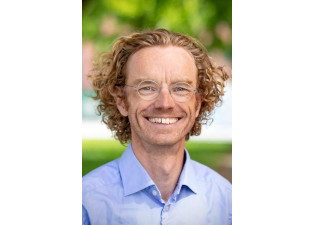
04.03.2026 - Distinguished Lecture Series: Thomas Schön (Uppsala University)
We are pleased to announce our upcoming Distinguished Lecture Series talk by Thomas Schön (Uppsala University)! The talk will take place on March 4, 9:45 - 11:15 CET. in room UN32.101.
Thomas B. Schön is the Beijer Professor in Artificial Intelligence in the Department of Information Technology at Uppsala University. He received the PhD degree in Automatic Control in Feb. 2006, the MSc degree in Applied Physics and Electrical Engineering in Sep. 2001, the BSc degree in Business Administration and Economics in Jan. 2001, all from Linköping University. He has held visiting positions with the University of Cambridge (UK), the University of Newcastle (Australia) and Universidad Técnica Federico Santa María (Valparaíso, Chile). In 2025 he was elected to The Royal Swedish Academy of Sciences (KVA). In 2018, he was elected to The Royal Swedish Academy of Engineering Sciences (IVA) and The Royal Society of Sciences at Uppsala. He received the Tage Erlander prize for natural sciences and technology in 2017 and the Arnberg prize in 2016, both awarded by the Royal Swedish Academy of Sciences (KVA). He was awarded the Automatica Best Paper Prize in 2014, and in 2013 he received the best PhD thesis award by The European Association for Signal Processing. He received the best teacher award at the Institute of Technology, Linköping University in 2009. He is a Senior member of the IEEE and a fellow of the ELLIS society.
Title: Clinical signals and theoretical insights: Exploring the principles and practice of AI
Clinical signals and theoretical insights: Exploring the principles and practice of AI
In this talk, I will explore how deep learning is transforming both clinical practice and fundamental research. We begin in the emergency room, where electrocardiograms (ECGs) are used to diagnose cardiovascular diseases. By leveraging large-scale clinical datasets, we show that deep neural networks can achieve good diagnostic performance—highlighting the power of data-driven medicine. In the second half, I shift focus to three core research areas that have emerged from our work in healthcare. First, I’ll introduce diffusion models and demonstrate their versatility across a few different computer vision tasks. Second, we will examine the challenge of using deep learning to solve regression problems, and how energy-based models offer promising solutions. Finally, I’ll touch on adversarial training and its role in building more robust AI systems. The talk is structured to reflect my broader philosophy: that research often arises from the interplay between real-world applications and foundational scientific inquiry.
Date: March 4, 2026
Time: 9:45 - 11:15 CET
Place: Universitätstraße 32.101, Campus Vaihingen of the University of Stuttgart.
Looking forward to seeing you all there! No registration necessary.